
A working business plan
Organize the offer, customers, goals, and operating assumptions.
Develop a clear business plan covering your services, customers, setup requirements, and next steps.
Request a consultation →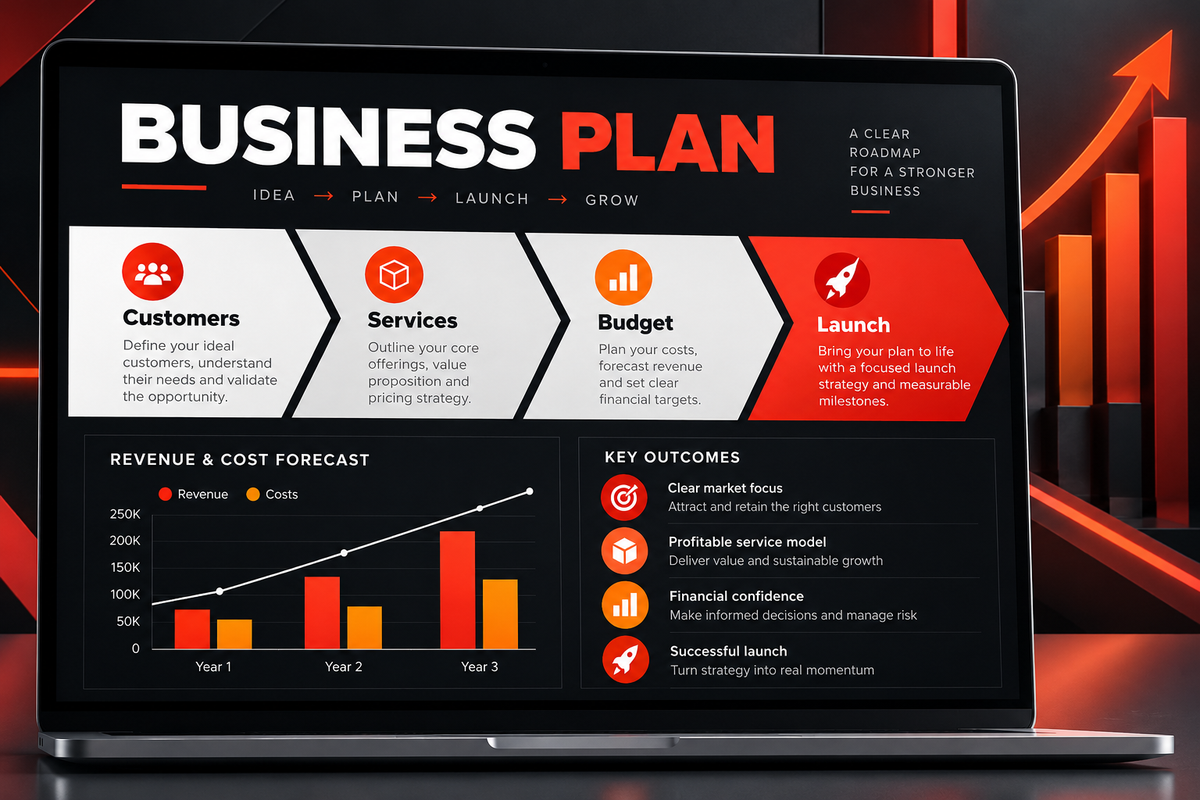
Organize the offer, customers, goals, and operating assumptions.
Break setup into manageable tasks.
Prepare working drafts and organize the information you need.
Identify questions to take to an attorney or tax professional.
The scope, deliverables, price, and estimated timing are agreed before work begins, with updates throughout the project.
Owners preparing to launch a small business, clarify an existing offer, or organize the next stage of growth.
Your business idea or current services, intended customers, available resources, and any existing plans or financial assumptions.
The quote confirms deliverables, revisions, responsibilities, and estimated timing before work begins.
Request a Quote →We start with what the business intends to sell, who it is for, and why a customer would choose it. That includes practical questions about how the work is delivered, what is included, and where the business can serve customers. A plan becomes more useful when those choices are specific enough to guide a website, a quote, a sales conversation, or the next operating decision.
Startup costs, ongoing expenses, pricing, expected demand, and capacity are planning inputs. We help organize the information and distinguish known amounts from estimates. If financial projections are included, their assumptions and source inputs should be clear. A projection is a planning tool, not a promise of revenue or funding. Accounting, tax, and legal decisions require the appropriate qualified advice.
A launch may involve accounts, suppliers, documents, branding, a website, and a way to handle inquiries or orders. We organize those tasks around dependencies and responsibilities. Some can proceed together, while others need a decision or approval first. A useful checklist identifies what must be supplied, who owns each task, and what completion looks like, so the plan can be used after the document is delivered.
An internal working plan does not need the same format as a document prepared for a lender or other external reader. We agree on the intended audience, required sections, research expectations, and available inputs before writing. Administrative preparation of formation materials can be discussed, while legal entity selection and legal advice remain with a qualified professional. The deliverable should fit its actual use.
A business owner has a service idea, a name, and several disconnected notes. An example project could organize the offer, identify the intended customers, list startup and monthly cost assumptions, create a launch checklist, and outline the first website pages. Specialist questions would be collected for the owner’s attorney or accountant rather than answered through guesswork.
The intended audience, research depth, financial inputs, document length, and number of revisions determine the scope. Filing fees, legal review, accounting services, and implementation of the plan are separate unless specifically included.
Discuss Business Planning →Yes. Planning can help with a launch, a restart, or a change in direction.
Administrative preparation and coordination can be discussed. Legal entity choices and legal advice belong with a qualified professional.
Yes. The level of detail, research, and financial inputs are agreed as part of the scope.
Tell us the intended audience and required format before quoting. Research, forecasts, and supporting documents are scoped to the brief, with no promise of financing.
Not always. A focused working plan may be more useful for a small launch. A lender or other recipient may have specific requirements that call for a more formal document.
Yes. Website, design, CRM, and document work can be scoped alongside the plan, with separate deliverables and costs clearly identified.
Share your current website, requirements, or questions to discuss the next steps.